
Garage Storage Installation in Portland & Vancouver WA
Garage shelving, wall storage, overhead racks, bike racks, and organization systems installed professionally.
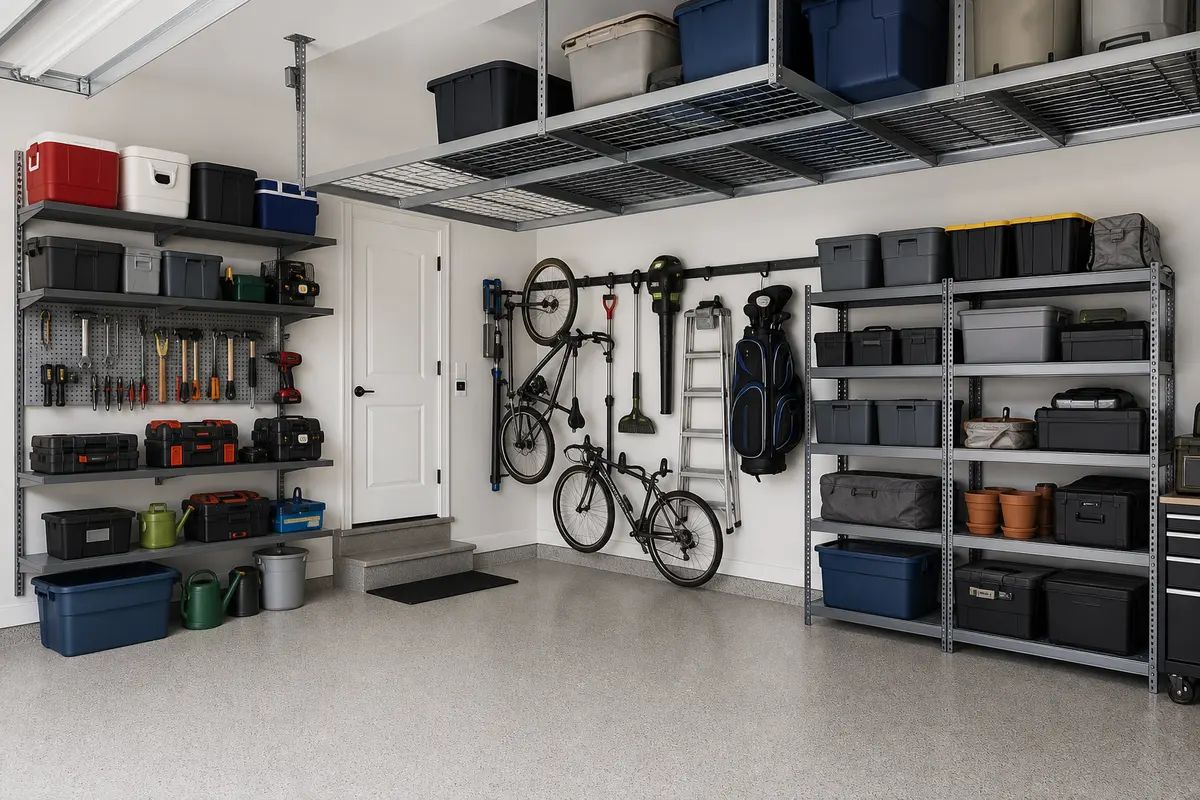
Garage shelving, overhead racks, wall storage systems, and bike or tool racks installed level, anchored properly, and ready to use — so your garage stays organized instead of cluttered.
What's Included
- Garage shelving & overhead racks
- Bike & tool rack mounting
- Wall storage systems
- Overhead rack installation
- Garage organization setup
- Anchored & level install
What We Install & Repair
Garage storage is a weight-ratings job before it is an organization job. Overhead racks, slatwall, heavy-duty shelving, and hoists all hang serious loads over your car and your head, so everything we install gets lagged into ceiling joists, wall studs, or concrete — never into drywall alone. We check what the structure can carry first, then size the system to the space, the door's travel, and your gear. Around here that gear is bikes, kayaks, ladders, and a wall of wet-season totes, and getting it off the damp slab is half the point.
- Overhead ceiling racks, lagged into joists
- Heavy-duty shelving units, assembled and anchored
- Slatwall panels and pegboard tool walls
- Bike racks, vertical hooks, and pulley hoists
- Kayak, canoe, and paddleboard hoists
- Ladder, tire, and cord hook systems
- Masonry anchoring into concrete and block walls
Common Problems We Solve
You want an overhead rack, but the garage door tracks are in the way.
The door's travel arc claims more ceiling than people expect. We run the door fully open, measure the true clearance above the tracks and opener rail, and position the rack so the door never touches a rail or a tote.
A shelf unit screwed to drywall is sagging away from the wall.
Drywall anchors were never meant for a shelf of paint cans and power tools. We take the load off, find the studs behind the finish, and refasten the unit with lag screws into framing.
Bare concrete or block walls, and nothing seems to grip them.
Ordinary screws and plastic plugs crumble out of concrete. We drill with a hammer drill and set wedge or sleeve anchors sized for the load — done right, masonry is the strongest wall in the house.
The car lives outside because the floor is full.
Floor storage is the least efficient storage a garage has. We plan the vertical surfaces first — overhead racks for seasonal bins, wall shelving for the heavy stuff, hooks for the awkward stuff — and the parking space usually comes back.
How It Works
Walk the garage and weigh the plan
We look at what you store, where the door and opener travel, and what the ceiling and walls are built from, then agree on a layout with realistic load numbers.
Find the structure
Joists and studs get located and marked, through finished drywall where needed. If the framing cannot support a planned rack, we say so before drilling.
Install and torque
Racks, shelving, slatwall, and hoists go up level, with every fastener driven into structure and torqued. Hoist pulleys are rigged and cycled until they run smooth.
Load test and hand off
We load the racks with your actual gear, confirm nothing shifts or deflects, and show you the working limits of each system.
What's Not Included
- Garage door and opener work — springs, tracks, and openers belong to a garage door company; our installs stay clear of them.
- Electrical additions — outlets, lighting circuits, and EV charger wiring are line-voltage work for a licensed electrician.
- Floor coatings — epoxy and polyaspartic finishes are a specialty floor contractor's trade.
- Custom-built workbenches and cabinetry — manufactured units we assemble and anchor; building wood storage from scratch is a separate carpentry project.
What Affects the Price
- Rack and unit count
- Each overhead rack or shelving unit is its own round of locating structure, assembly, and anchoring — the visit scales with the list.
- Ceiling finish and height
- Exposed joists are fast; a finished ceiling means locating every joist blind, and tall ceilings slow the overhead work.
- Wall material
- Stud walls take lag screws directly; concrete and block need hammer-drilled holes and masonry anchors, which is slower per fixture.
- Hoists and pulley systems
- A kayak or bike hoist is rigging, not just mounting — routing, tensioning, and testing the pulleys takes noticeably longer than a fixed rack.
Frequently Asked Questions
How much weight will an overhead garage rack really hold?
The number on the box only applies when every mounting point lands in a joist and the load is spread across the platform. A 600-pound-rated rack hanging off two joists and some drywall anchors is not a 600-pound rack. We fasten all points into framing and tell you the honest working load for your ceiling.
Can you install racks on a finished drywall ceiling?
Yes. We locate the joists through the finish, confirm direction and spacing with test holes where needed, and lag the rack into them. Joist direction sometimes dictates which way the rack faces — we sort that out before drilling.
Will an overhead rack interfere with my garage door?
Not if it is planned around the door's real travel. The tracks and opener rail sweep a deep zone when the door opens, so we measure with the door up and mount the rack behind that zone or choose a shallower drop.
Slatwall or pegboard for a tool wall?
Pegboard is inexpensive and fine for hand tools, but its hooks fall out when you grab things and it caps out at light loads. Slatwall costs more, holds shelves, bins, and heavier hooks, and locks accessories in place. For a wall you use daily, slatwall wins; for a rarely touched corner, pegboard is plenty.
Can you hang a kayak or canoe hoist?
Yes — hoists are a frequent request. The pulleys must anchor into joists aligned with the boat's length, so the framing often dictates placement. We rig it, balance the lift, and make sure it locks off securely at height.
Areas We Cover
Request a Free Garage Storage Installation Estimate
Tell us what you need and we'll get back to you with a quote. Photos welcome.