
Network Troubleshooting in Portland, OR & Vancouver, WA
Slow Wi-Fi, dropouts, and dead zones diagnosed and fixed — for home offices, shops, and small businesses.
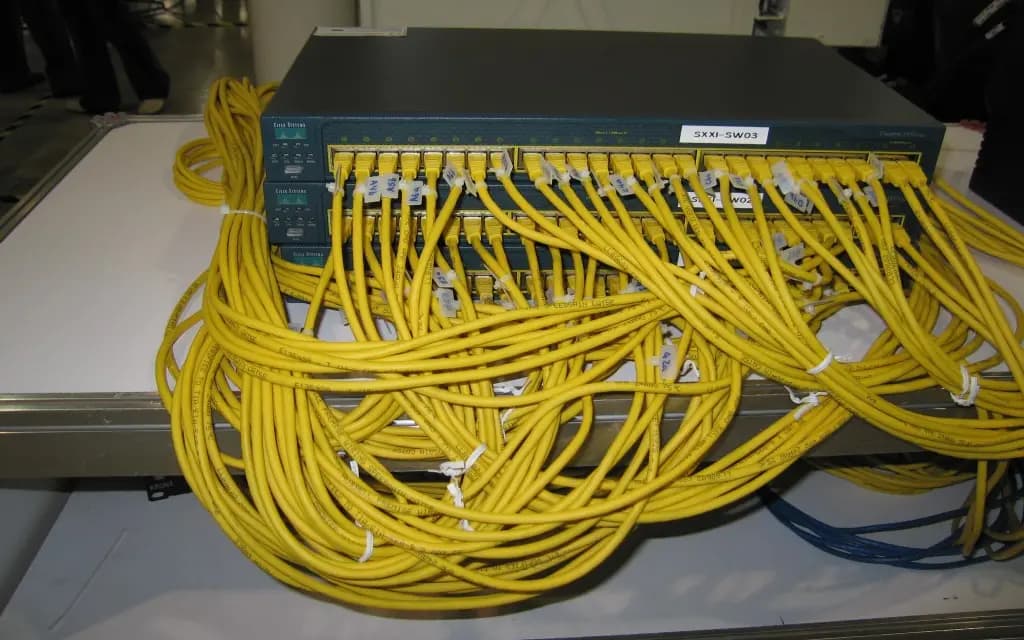
Network problems diagnosed methodically instead of guessed at — we measure where the signal dies, find the misconfiguration or the failing hardware, fix it, and explain what was wrong in plain language.
What's Included
- Slow Wi-Fi diagnosis
- Dropout & interference fixes
- Router & modem reconfiguration
- Dead zone fixes
- Printers & devices back online
- Speed testing & tune-up
What We Install & Repair
Slow Wi-Fi, dead zones, random dropouts, devices that vanish from the network — diagnosed with measurements, not guesses. We establish a wired baseline, walk the space with a signal meter to see where coverage actually dies, and read the router's configuration and logs before touching any hardware. Home offices, shops and small businesses alike.
- Slow-speed diagnosis: wired baseline versus wireless reality
- Dead zone mapping with a signal survey, room by room
- Dropout and intermittent-connection investigation
- Interference and channel-congestion analysis
- Router and modem reconfiguration — double NAT, wrong modes, stale firmware
- Printers, cameras and smart devices brought back online
- Before-and-after speed tests so the improvement is provable
Common Problems We Solve
Fast next to the router, unusable in the back of the house
Classic distance-and-walls physics, and in older Portland and Vancouver homes the plaster and chimney masonry are usually the culprit. We measure exactly where the signal collapses, then recommend the cheapest fix that actually works — sometimes relocation, sometimes a wired node, never a guess.
The whole connection drops for a minute, several times a day
Intermittent faults hide from reboots. We pull the modem's error logs, check signal levels on the line, and watch for overheating or a dying power supply — the evidence points at either your gear or the provider's, and we show you which.
Video calls stutter while speed tests look fine
Raw speed is not the same as stability. We test for latency spikes and bufferbloat under load, check what else on the network is saturating the uplink, and tune the router's queue management so a backup job cannot trample your meeting.
Paying for fast internet, never seeing it
We measure at the modem over a cable first. If the plan's speed arrives there, the problem is inside the house and we chase it; if it does not, you get documented numbers that turn an argument with the ISP into a service ticket.
How It Works
Hear the symptoms
When it happens, where in the building, which devices — the pattern narrows the search before any equipment comes out of the bag.
Measure the baseline
A wired test at the modem shows what the ISP is delivering; a walking signal survey shows what your rooms are receiving. The gap between those two numbers is where the fault lives.
Isolate the cause
Settings, hardware, or environment — we work through configuration, cabling, interference sources and failing gear methodically, changing one variable at a time.
Fix and prove it
The repair happens on the spot where possible; then we re-test at the trouble points, show you the before-and-after numbers, and explain what was broken in words, not jargon.
What's Not Included
- Faults on the provider's side of the line — a bad drop, street-level outages, or an underdelivering plan are the ISP's to repair. We hand you the measurements that prove where the fault sits.
- Making a connection faster than the plan you pay for — no configuration turns a 100-megabit subscription into more than that.
- Line-voltage electrical work — if the diagnosis turns up a power problem, a licensed electrician takes it from there.
- Larger office networks with managed switching and VLAN design — beyond the small-business scale we work at, and better served by an IT firm.
What Affects the Price
- Number of symptoms
- One clear complaint is a shorter hunt than a network with three unrelated problems stacked on top of each other.
- Settings versus hardware
- A configuration fix ends the visit; a failing router or a damaged cable run adds replacement or repair work.
- Size of the space
- More rooms and floors mean more survey points and more places a fault can hide.
- Cable condition
- If testing traces the fault to a kinked, chewed or badly terminated run, repairing or re-pulling that cable is quoted as part of the fix.
Frequently Asked Questions
Is my slow internet the ISP's fault or my Wi-Fi's?
That is the first thing we determine, with one wired measurement at the modem. Full speed there means the bottleneck is your router, its placement, or the building; a shortfall means the provider owes you a fix, and you will have the numbers to demand it.
Do Wi-Fi extenders fix dead zones?
Rarely well. A repeater rebroadcasts a signal that is already weak where it sits, halving throughput. Sometimes relocating the router or changing channels solves the dead zone; when the honest answer is wired equipment, we say so and quote that as its own job.
Why does my connection drop at the same time every day?
Time-patterned dropouts are a diagnostic gift. Evening slowdowns point at neighborhood congestion or channel overlap; a drop whenever the microwave runs points at 2.4 GHz interference; a nightly drop can be a lease renewal or a scheduled reboot. The clock tells us where to look first.
Can you tell whether my router is failing or just misconfigured?
Yes — that distinction is most of the job. Logs, temperature, uptime behavior and a factory-fresh test configuration separate a tired box from a badly set-up one. We would rather fix settings on gear you own than sell you a replacement that changes nothing.
My devices show full bars but nothing loads — how is that possible?
Bars measure the link between your phone and the router, not the router's link to the internet. Strong bars with no data usually means a modem fault, a DNS problem, or double NAT choking traffic upstream — all invisible to the signal icon.
Areas We Cover
Free estimate
Request a Free Network Troubleshooting Estimate
Tell us what you need and we'll get back to you with a quote. Photos welcome.